
Managing employees involves much more than recruiting new staff and processing payroll. Businesses need to support employees throughout their entire employment journey, from the initial hiring process and onboarding to performance management, career development and eventual offboarding.
For many organisations, handling every HR responsibility internally can become challenging. As teams grow, businesses must manage employment documentation, workplace policies, employee concerns, compliance obligations and changes to workforce requirements. These responsibilities require time, knowledge and consistent processes.
Outsourced human resources support provides businesses with access to professional HR assistance without necessarily maintaining a large internal HR department. It can help organisations establish structured employee processes, improve communication and manage important workforce responsibilities.
Understanding how outsourced HR supports each stage of employment can help businesses determine where additional expertise may be useful. This article explains how HR outsourcing can cover the complete employee lifecycle, from the first day of employment through to the final stage of an employee’s departure.
Understanding the Employee Lifecycle
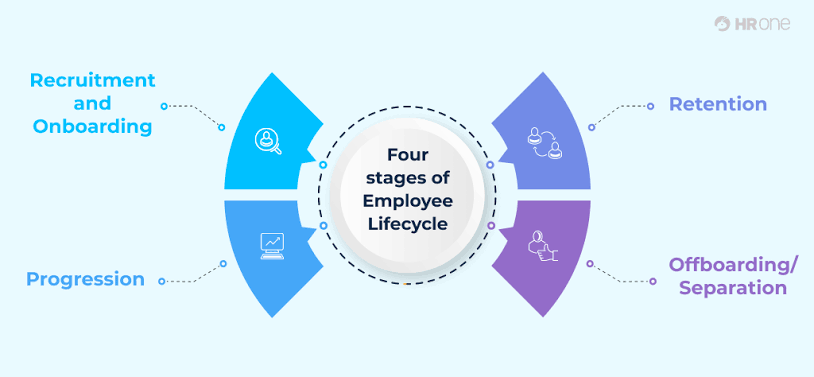
The employee lifecycle refers to the different stages an individual experiences while working for an organisation. Although the exact process varies between businesses, it generally includes recruitment, onboarding, development, retention and offboarding.
Each stage involves different responsibilities and requires appropriate HR support.
A well-managed employee lifecycle helps businesses establish consistent employment practices while ensuring employees understand their responsibilities, workplace expectations and available support.
The main stages include:
- Recruitment and selection.
- Employee onboarding.
- Performance management.
- Training and professional development.
- Employee engagement and retention.
- Workplace relations and employee support.
- Offboarding and separation.
Outsourced HR can provide assistance across these stages, depending on the services included in the agreement.
1. Recruitment and Employee Selection
The employee lifecycle begins before a person officially joins the organisation. Recruitment involves identifying workforce requirements, preparing position descriptions, advertising vacancies and selecting suitable candidates.
Businesses need clear recruitment processes to attract appropriate applicants and make informed hiring decisions.
Outsourced HR support can assist with:
- Developing position descriptions.
- Reviewing recruitment policies and procedures.
- Establishing interview processes.
- Preparing employment documentation.
- Advising on employment conditions.
- Supporting recruitment planning.
A structured recruitment process helps businesses communicate role expectations and establish a consistent approach to candidate selection.
HR professionals can also help employers consider relevant employment obligations, including applicable awards, enterprise agreements and workplace legislation.
2. Employee Onboarding and Induction
Once a candidate accepts an employment offer, the onboarding process begins. This stage introduces the employee to the organisation, their responsibilities, workplace policies and team members.
A well-organised onboarding process can help new employees understand their roles and become familiar with business operations.
Outsourced HR may assist with preparing and managing:
- Employment contracts and offer letters.
- New employee documentation.
- Workplace policies and procedures.
- Induction checklists.
- Employee handbooks.
- Position descriptions.
- Initial training arrangements.
The onboarding process should also cover important administrative requirements, including tax and superannuation information, applicable employment conditions and workplace health and safety responsibilities.
Clear onboarding arrangements help employees understand what is expected of them from the beginning of their employment.
3. Managing Performance and Employee Expectations
After onboarding, businesses need processes to monitor employee performance and provide regular feedback.
Performance management helps employees understand their responsibilities, recognise areas for improvement and work towards professional objectives.
Without clear performance expectations, managers may find it difficult to address performance concerns consistently.
Outsourced HR can support businesses by helping them establish:
- Performance review procedures.
- Employee development plans.
- Performance improvement processes.
- Manager feedback guidelines.
- Role expectations and key responsibilities.
- Documentation for performance discussions.
HR professionals can also provide guidance when an employee is not meeting expected performance standards. This may involve helping managers prepare for discussions, document concerns and follow appropriate procedures.
4. Training and Professional Development
Employee development is an important part of maintaining a capable and productive workforce. As business requirements change, employees may need additional knowledge, technical skills or leadership capabilities.
Professional development can also contribute to employee satisfaction by showing that the organisation values learning and career progression.
Outsourced HR support can help businesses identify training requirements and establish development processes.
This may include:
- Identifying skills gaps.
- Developing training plans.
- Supporting induction and ongoing learning.
- Establishing professional development objectives.
- Creating career progression frameworks.
- Supporting leadership development initiatives.
The specific training arrangements will depend on the organisation’s needs and the services included in its HR outsourcing agreement.
5. Employee Engagement and Retention
Retaining experienced employees can help businesses maintain operational knowledge, reduce recruitment pressures and support team continuity.
Employee engagement involves understanding how employees feel about their work, management, workplace environment and opportunities for development.
Businesses can use several approaches to support engagement, including regular communication, feedback sessions, recognition and professional development opportunities.
Outsourced HR can assist with:
- Employee engagement surveys.
- Workplace feedback processes.
- Employee recognition policies.
- Retention planning.
- Workplace culture initiatives.
- Reviewing employee concerns.
These activities can help employers identify areas that may need attention and develop practical approaches to improving the employee experience.
6. Managing Workplace Relations and Employee Issues
Workplace issues can arise at different stages of the employee lifecycle. These may include disagreements between employees, performance concerns, complaints, workplace conduct matters and requests for flexible working arrangements.
Handling these situations requires a fair and consistent approach.
Outsourced HR professionals can provide guidance on workplace policies, documentation, communication and appropriate procedures.
Their support may include:
- Advising on workplace policies.
- Assisting with employee grievance procedures.
- Supporting workplace investigations.
- Providing guidance on disciplinary processes.
- Helping managers prepare for difficult conversations.
- Advising on relevant employment obligations.
Businesses should ensure that employee matters are handled confidentially and in accordance with applicable workplace laws.
7. Payroll, Employment Records and HR Administration
Employee administration continues throughout the employment relationship. Businesses must maintain accurate records and manage important employment information.
Depending on the service arrangement, outsourced HR providers may assist with HR administration and coordinate with payroll specialists.
Common administrative responsibilities include:
- Maintaining employee records.
- Updating employment documentation.
- Managing leave information.
- Preparing HR reports.
- Supporting payroll-related administration.
- Reviewing employment policies.
- Maintaining relevant compliance documentation.
It is important to establish which responsibilities are included in the outsourcing agreement. Payroll processing, bookkeeping and HR advisory services may be offered separately or as part of a broader service package.
8. Employee Offboarding and Exit Management
The final stage of the employee lifecycle is offboarding. This occurs when an employee resigns, retires, reaches the end of a fixed-term agreement or leaves the organisation for another reason.
Offboarding should be managed carefully because businesses must complete several administrative and legal responsibilities.
Outsourced HR can help employers coordinate:
- Resignation acknowledgements.
- Notice period arrangements.
- Final employment documentation.
- Exit interviews.
- Return of company property.
- Access removal and handover procedures.
- Final pay and outstanding entitlements.
- Employee record updates.
Final pay must be calculated in accordance with applicable employment laws and the employee’s relevant award or agreement.
A structured offboarding process also helps businesses collect feedback, transfer important responsibilities and maintain professional relationships with departing employees.
Why Businesses Choose HR Outsourcing
Managing the employee lifecycle internally requires time, resources and knowledge of employment practices. Smaller businesses may not have a dedicated HR department, while larger organisations may need additional support during periods of growth or organisational change.
Outsourcing can provide access to experienced HR professionals without requiring the business to employ a full internal HR team.
Some potential benefits include:
- Access to HR expertise: Businesses can receive professional guidance on employment matters and workplace procedures.
- Consistent processes: Standardised HR documentation and procedures can support more organised employee management.
- Administrative support: Outsourcing can reduce the time managers spend handling routine HR responsibilities.
- Business flexibility: HR support can be adjusted according to workforce requirements and business growth.
- Compliance assistance: Professional guidance can help employers understand and manage relevant employment obligations.
The actual benefits depend on the provider’s services, the organisation’s requirements and how responsibilities are divided.
Choosing the Right HR Outsourcing Provider
Selecting an appropriate provider is an important decision because HR responsibilities involve sensitive employee information and workplace obligations.
Businesses should assess potential providers based on their experience, service coverage and approach to communication.
Consider the following questions:
- Do they support the full employee lifecycle?
- Can they assist with recruitment and onboarding?
- Do they provide workplace relations advice?
- Can they help develop HR policies and procedures?
- Do they understand Australian employment requirements?
- How do they manage confidential employee information?
- What services are included in their agreement?
- Who will be the main contact for HR support?
Businesses comparing HR outsourcing Sydney providers should also consider whether the services can support their current workforce size and future business requirements.
A suitable provider should offer a clear service scope and explain how HR responsibilities will be managed between the business and the external team.
Conclusion
Managing the employee lifecycle requires consistent attention at every stage of employment. Recruitment, onboarding, performance management, training, employee engagement and offboarding all contribute to how effectively a business manages its workforce.
Outsourced HR can provide support across these responsibilities by helping businesses establish structured processes, maintain employment documentation and access professional guidance when workplace matters arise.
For organisations considering HR outsourcing Sydney covering the full employee lifecycle, it is important to select a provider that understands their workforce requirements and can deliver support across the relevant stages of employment.
A well-managed employee lifecycle benefits both employers and employees. By establishing clear processes from recruitment through to offboarding, businesses can create a more organised workplace, support their teams and manage employment responsibilities with greater confidence.