
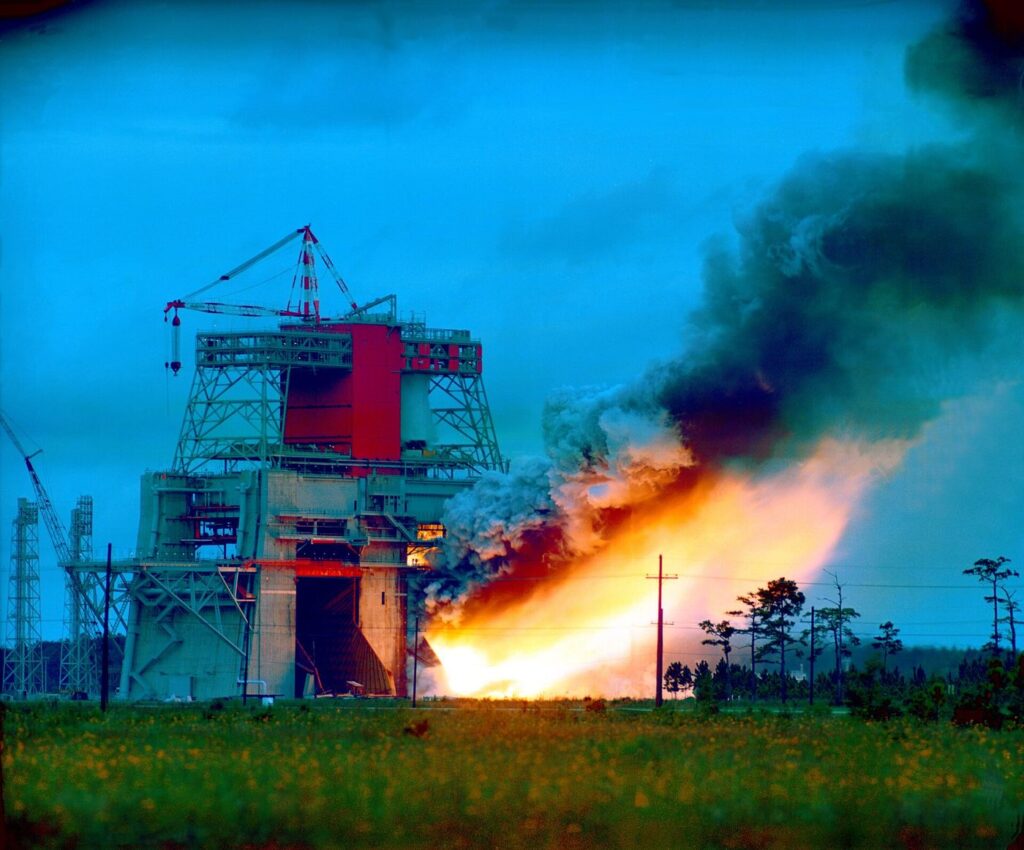
NASA has successfully tested the powerful RS-25 rocket engine that will carry astronauts to the Moon, firing it for a full 200 seconds in a dramatic ground test. The test was reported on 20 November 2026 and took place at NASA’s Stennis Space Center in Mississippi, and it gathered data that could make future Moon missions safer and more reliable. The RS-25 engines power the Space Launch System, the giant rocket at the heart of NASA’s Artemis programme, and each engine produces about 512,000 pounds of thrust in the vacuum of space. The 200-second firing is a sustained hot-fire test, and engineers watch hundreds of measurements during it, from temperatures and pressures to vibration, checking that the engine performs exactly as designed before it is trusted with a crew.
What the Evidence Shows
The RS-25 has a long history, having flown on the Space Shuttle for three decades before being adapted for the Space Launch System. The engines are among the most efficient rocket engines ever built, burning liquid hydrogen and liquid oxygen to produce thrust. Testing them on the ground is essential because a failure during launch cannot be fixed in flight, and each test builds confidence for the missions ahead. The November test comes as NASA accelerates its plan to land astronauts on the Moon in 2028, with a crucial orbital test of the lunar landers scheduled for 2027. The data from the 200-second firing will feed into preparations for the next Artemis flights, helping engineers confirm that the engines are ready for the journey. Reporting and analysis from sources such as Nature track the same developments, and specialists following the RS-25 engine test say the direction is now consistent across independent lines of evidence.
The Wider Context
The wider context is a research landscape in which replication and open data now decide reputations. Findings connected to the RS-25 engine test are being checked by independent groups with shared datasets, and the teams involved publish their methods in full so rivals can test every step. That discipline is slower than a headline cycle, but it is why results in this area increasingly survive first contact with scrutiny.
What Happens Next
What happens next in the story of the RS-25 engine test will be decided by follow-up work already under way: larger samples, longer observation and instruments that have not yet come online. The researchers involved are unusually united on one point, that the current results justify the next investment of time and money. Readers will not have to wait long for the first tests of that claim. You can follow related developments in our coverage of science.
None of this will be settled by a single announcement, study or product launch. The pattern to watch is accumulation: independent confirmations, honest reporting of failures and steady improvement in the underlying numbers. Readers who follow those signals, rather than the loudest claim of the week, will understand this subject better than most of the commentary surrounding it suggests is possible.
