
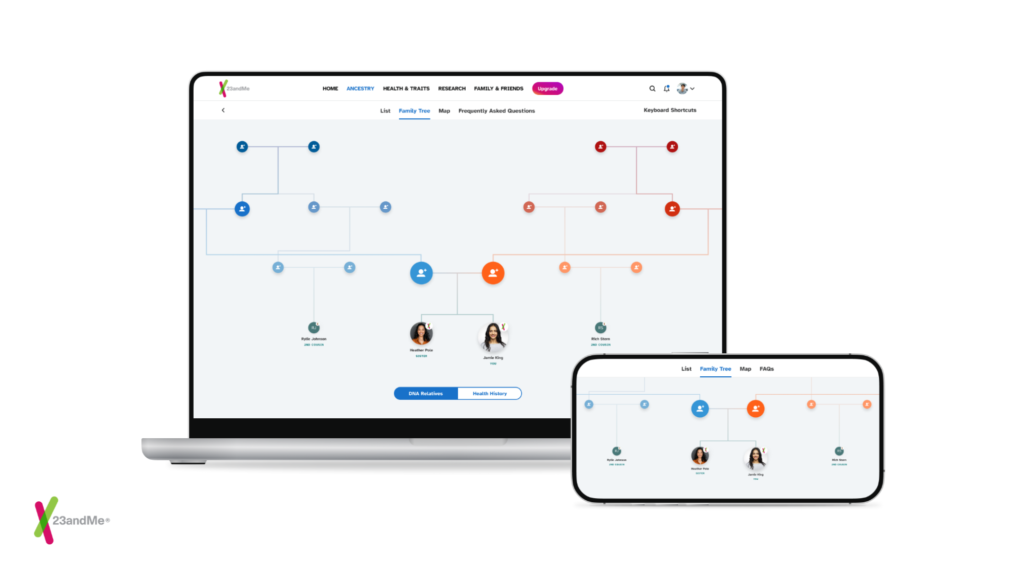
Family history research continues to evolve as DNA testing platforms introduce new ways to help people understand their ancestry. 23andMe is one of the well-known services in this space, offering genetic insights that can help users explore their heritage and identify potential relatives. Its family tree tools are an important part of this experience, connecting genetic information with the relationships that shape a person’s family history.
The latest focus on 23andMe family tree tools getting a new look highlights the growing demand for simpler, more accessible ways to explore family connections. A modern family tree experience can make it easier for users to organize relatives, review potential relationships, and understand how DNA matches may fit into their family history.
For people who have already completed a DNA test, family tree features can provide another way to explore their results. Instead of looking only at ancestry percentages or lists of genetic matches, users can work toward building a clearer picture of how different relatives may be connected.
What Are 23andMe Family Tree Tools?
23andMe family tree tools help users explore family relationships through information associated with their genetic profiles and available family connections. These features can provide context for DNA matches and help users investigate how relatives may be connected across different generations.
Traditional genealogy often begins with names, dates, birth records, marriage certificates, and family stories. DNA-based research adds another layer by identifying genetic similarities between people who may share a common ancestor.
Combining these approaches can make family history research more informative. For example, someone investigating an unfamiliar branch of their family may use a DNA match as a starting point before searching historical records or speaking with older relatives.
Family tree tools can also help users organize what they already know. Rather than keeping family relationships scattered across handwritten notes or separate documents, users can build a more structured representation of their family connections.
The usefulness of these features depends on the information available, the accuracy of family details, and the willingness of relatives to participate. DNA results can provide valuable clues, but they do not automatically reveal every relationship or identify every ancestor.
Why the New Look Matters for Family History Research
A refreshed interface can make genealogy tools easier to navigate, particularly for people who are new to DNA testing or unfamiliar with family tree research.
Family history can become complicated quickly. A person might have dozens of genetic matches, relatives with similar names, incomplete records, and several possible explanations for a connection. Clear navigation and well-organized information can help reduce that complexity.
A More Accessible Research Experience
One of the main benefits of modern digital tools is accessibility. Users should be able to understand where to find family information without spending excessive time navigating menus or searching through unrelated sections.
A well-designed family tree interface can make important details easier to review. Depending on the available features, users may be able to move between relatives, inspect relationships, and identify areas where additional research is needed.
This can be particularly helpful for beginners who want to investigate their ancestry without learning complicated genealogy software.
Better Organization of Family Connections
Family history research often involves several generations and multiple branches. Without a clear structure, it can be difficult to remember how different relatives connect.
A family tree provides a visual framework for organizing those relationships. Users can compare known family connections with potential DNA relationships and identify missing information.
For example, someone who discovers an unfamiliar genetic relative might begin by examining shared family names, known locations, and the relatives already represented in their family tree.
These clues can help narrow the search, although additional evidence is often necessary before confirming a relationship.
A More Engaging Way to Explore Ancestry
DNA testing is often the beginning of a longer journey rather than a one-time activity. People may return to their results when new relatives test, historical documents become available, or family members share previously unknown information.
An accessible family tree experience can encourage users to revisit their research and update their understanding over time.
Still, the exact improvements associated with a particular redesign should be confirmed through official 23andMe announcements. A new appearance alone does not establish that the service has added new DNA analysis methods or expanded its underlying database.
How DNA Testing Supports Family Tree Research
DNA testing offers a different approach to understanding family history. Historical records describe events and relationships documented by people, while genetic results provide evidence of biological connections.
When two people share identifiable DNA segments, their results may indicate that they have a common ancestor. The amount of shared DNA can help estimate how closely they may be related.
However, genetic relationships are not always straightforward. Different relationships can produce overlapping amounts of shared DNA, and relatives from the same family may share DNA through more than one ancestral line.
Understanding DNA Matches
A DNA match is someone whose genetic results show a detectable relationship with another tested person. Depending on the platform and its available data, matches may include close relatives, distant cousins, or people whose connection is not immediately obvious.
A match can be useful even when the relationship is unknown. Users can investigate shared surnames, geographical locations, family stories, and documented ancestors to develop possible explanations.
The strongest conclusions usually come from combining several types of evidence rather than relying on a single DNA match.
Estimating Family Relationships
DNA platforms may provide estimated relationship categories to help users understand how they could be connected to a match.
These estimates are useful starting points, but they are not always definitive. For example, different cousin relationships can share similar amounts of DNA, making it difficult to identify an exact relationship from genetic information alone.
Age, known family relationships, family tree details, and additional matches can help narrow the possibilities.
Users should treat estimated relationships as research clues instead of confirmed genealogical facts.
Connecting DNA Results With Family Trees
A family tree becomes more useful when users can compare genetic information with documented relationships.
Suppose someone discovers a DNA match with an unfamiliar surname. The match might belong to a branch of the family that has not been documented. By comparing locations, known relatives, and historical records, the user may identify a possible connection.
The next step is to verify that connection with reliable evidence.
Birth records, marriage certificates, census documents, obituaries, and information provided by relatives can help establish whether a proposed relationship makes sense.
DNA testing can point researchers in a promising direction, but historical documentation remains essential for building an accurate family tree.
What Users Should Know About 23andMe’s Family Tree Experience
People interested in the updated 23andMe family tree tools should consider how the experience fits into their broader genealogy goals.
A redesigned interface may improve usability, but the overall value of the platform also depends on its available data, privacy practices, account features, and ability to help users interpret genetic relationships.
Design Improvements Versus New Features
A visual redesign can change how information appears without changing the underlying capabilities.
For example, a platform might reorganize navigation, improve the presentation of family connections, or make existing information easier to find. These changes can improve the user experience even when the core analysis remains the same.
New functionality is different. Features such as additional relationship analysis, expanded record access, or new ways to collaborate with relatives would represent more substantial changes.
Without verified release details, users should avoid assuming that every improvement associated with a new look includes additional capabilities.
Checking the current product interface and official announcements is the best way to determine which changes are available to a particular account.
Availability May Vary
Not every user necessarily has access to identical features. Availability can depend on the account, product offering, regional restrictions, and the platform’s current policies.
Users should also remember that family tree tools may rely on information that is incomplete or unavailable. If relatively few relatives have taken DNA tests or shared family information, the resulting tree may contain gaps.
An updated interface cannot independently solve these limitations. The quality of family research still depends on the evidence and information available.
How to Make the Most of 23andMe Family Tree Tools
Users can get more value from family tree features by approaching their research methodically. Rather than trying to identify every ancestor immediately, it is often more productive to begin with known relationships and expand the tree gradually.
Start With What You Already Know
Begin by documenting close family members, including parents, grandparents, siblings, and other relatives whose relationships are established.
Record names and approximate dates carefully. Where possible, add information about birthplaces, marriages, and other important family events.
Starting with reliable information creates a foundation for evaluating unfamiliar DNA matches later.
Review Genetic Matches Carefully
When exploring DNA matches, pay attention to the estimated relationship and any family details that may help explain the connection.
Avoid assuming that people with the same surname are necessarily related. Names can change through marriage, adoption, migration, and other family circumstances.
Instead, look for multiple clues that support the same explanation.
Compare Different Sources of Evidence
The most reliable family trees combine DNA results with historical documentation and family knowledge.
If a potential match appears to belong to a particular branch, search for records that support the connection. A shared surname or a suggested relationship can provide a lead, but additional evidence can make the conclusion more reliable.
Keeping track of uncertain relationships is also important. Marking a connection as unconfirmed helps prevent an early assumption from becoming an accepted family fact.
Speak With Relatives
Family members may know details that are absent from official records or DNA platforms.
Older relatives can sometimes identify photographs, explain family migrations, recall maiden names, or provide information about relatives who are no longer alive.
These conversations can reveal valuable leads and help researchers understand the personal stories behind their family trees.
Keep Family Information Updated
Genealogy research is an ongoing process. New DNA matches, historical documents, and family conversations may change an earlier understanding of a relationship.
Review your tree periodically and update information when stronger evidence becomes available.
Keeping notes about the source of each important detail can also make it easier to evaluate your conclusions later.
Privacy Considerations When Using DNA Family Tree Tools
DNA information is deeply personal because it can reveal biological relationships and unexpected details about family history. Users should consider privacy before sharing genetic results or connecting their accounts with other genealogy services.
23andMe users should review the company’s current privacy policy, account settings, consent options, and available controls for genetic relative matching.
The exact controls available may change, so users should check their current account settings rather than assume that every privacy option works the same way across products or over time.
Understand What You Share
Depending on the service’s settings, participating in DNA relative matching may allow other users to discover that a genetic relationship exists.
Before enabling sharing features, consider whether you are comfortable with potential relatives viewing the information associated with your profile.
It is also worth remembering that family discoveries can affect other people. An unexpected biological relationship may reveal information about adoption, donor conception, or previously unknown family connections.
Users should approach sensitive discoveries thoughtfully and respect the privacy of relatives who may not wish to discuss them.
Check Account Security
Use a strong, unique password and enable additional account security measures when available.
Be cautious about sharing screenshots of DNA results, family trees, or personal identifiers on public websites. Even seemingly ordinary family information can become sensitive when combined with other details.
Users should also understand the difference between deleting information, disabling a feature, and changing sharing preferences. These actions may have different consequences under the service’s current policies.
How 23andMe Compares With Traditional Genealogy Research
DNA-based research and traditional genealogy serve related but different purposes.
Historical genealogy relies on documents, archives, family records, and other sources to establish relationships and reconstruct family histories. DNA testing adds genetic evidence that may support an existing theory or reveal a connection that records have not made obvious.
Neither approach is perfect on its own.
Historical documents can contain errors, omit family members, or use names inconsistently. DNA results can identify biological relationships without revealing the exact ancestor responsible for the shared DNA.
Combining both approaches generally provides a stronger foundation for accurate family research.
For example, a historical document may identify a person’s great-grandparents, while DNA matches from several descendants may help researchers evaluate whether the proposed family connection is biologically consistent.
This combination is particularly useful when investigating distant relatives, migration histories, and branches of a family with limited documentation.
Challenges That Can Affect Family Tree Accuracy
Even with improved digital tools, building an accurate family tree requires patience. Several challenges can affect the interpretation of family relationships.
One common issue is incomplete information. A user may have strong documentation for recent generations but little evidence about earlier ancestors. In those cases, the family tree may remain incomplete until additional records become available.
Another challenge involves relationship estimates. DNA can indicate that two people are related without identifying their precise positions in a family tree.
Family structures can also be more complicated than a simple branching diagram suggests. Adoption, remarriage, donor conception, and multiple relationships between the same families may create connections that require careful interpretation.
Finally, errors can spread when users copy information from other family trees without verifying the original sources.
A responsible approach involves checking important details, recording uncertainty, and distinguishing confirmed relationships from possibilities.
What the Future Could Bring for Digital Family Trees
Digital genealogy tools are becoming increasingly important for people who want to understand their ancestry. As services refine their interfaces and research features, users may benefit from more accessible ways to organize family information and interpret potential relationships.
Future developments across the genealogy industry could include clearer relationship explanations, improved record discovery, more flexible family tree organization, and better collaboration between relatives.
Artificial intelligence may also help researchers organize historical documents, recognize names in old records, and identify possible connections between different sources. However, AI-generated suggestions would still require human review because historical records can be incomplete and automated systems can make mistakes.
These are broader possibilities for the industry, not confirmed promises about the current 23andMe family tree redesign.
For now, the most valuable improvements are those that help users understand their results, distinguish reliable evidence from speculation, and investigate family connections more efficiently.
A simple, intuitive interface can make that process less intimidating for beginners while helping experienced researchers manage increasingly complex family histories.
Frequently Asked Questions
What are 23andMe family tree tools?
23andMe family tree tools help users explore family relationships and use available genetic information to investigate potential connections with relatives.
Why are 23andMe family tree tools getting a new look?
A refreshed interface can make family information easier to navigate and understand. The exact changes should be confirmed through official product announcements.
Can 23andMe DNA results identify every relative?
No. DNA testing can identify genetic matches among participating users, but it cannot identify every relative or automatically reconstruct a complete family tree.
Are DNA relationship estimates always accurate?
No. Relationship estimates are useful clues, but several family relationships can produce similar amounts of shared DNA. Additional evidence may be needed.
Can I build a family tree without DNA testing?
Yes. You can build a family tree using family records, historical documents, interviews, photographs, and genealogy research. DNA testing is an additional source of evidence, not a requirement.
How can I improve the accuracy of my family tree?
Start with verified family information, compare DNA matches with historical records, speak with relatives, and clearly identify relationships that remain uncertain.
Is my genetic information private when using family tree tools?
Privacy depends on the service’s policies, consent choices, and account settings. Review the current privacy policy and sharing controls before enabling genetic relative matching or sharing family information.
Conclusion
The renewed attention surrounding 23andMe family tree tools getting a new look reflects the continuing interest in accessible, technology-driven genealogy. For people exploring their ancestry, a clear interface can make it easier to navigate family information, investigate genetic matches, and organize relationships across generations.
