
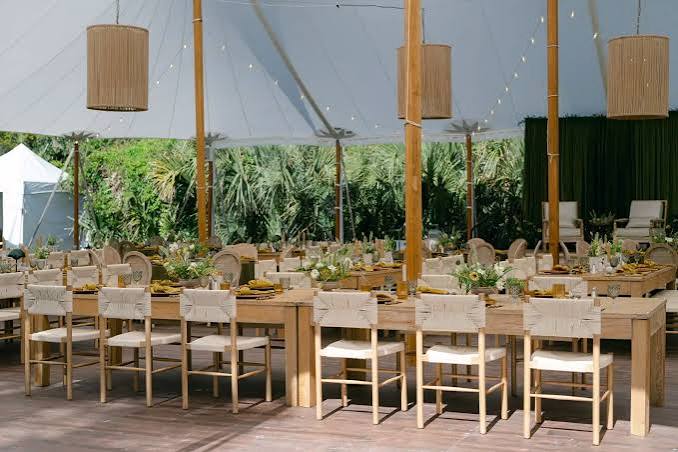
The Options
When an event’s seating and tables fall short, the fallout is immediate: guests standing awkwardly at cocktail hour, a head table that wobbles during toasts, or a rental delivery that arrives too late to set up properly. Hosts who skip careful planning often find themselves scrambling day-of, paying rush fees, or apologizing to guests for cramped seating arrangements. Corporate events lose credibility when tables look mismatched or chairs feel unstable under presenters. Weddings, in particular, carry little room for error since there’s rarely a second chance to get the reception layout right. Vendors who overbook inventory for peak wedding season can leave hosts with mismatched sets pulled together at the last minute, which rarely photographs well. Ignoring this decision early in the planning process tends to compound into bigger headaches closer to the event date.
Event planners generally choose from a handful of furniture rental paths. Some rely on large national rental chains that offer standardized inventory and predictable pricing but limited flexibility on style or last-minute changes. Others turn to local rental companies that know the region’s venues, weather patterns, and logistical quirks, often providing more personalized service. A growing number of hosts also experiment with peer-to-peer rental marketplaces or borrowing from friends and family, though this route can introduce inconsistency in quality and availability. Each option carries trade-offs in cost, convenience, and reliability that deserve consideration before a contract is signed.
How to Evaluate
Evaluating a rental provider starts with matching their inventory to the event’s actual needs rather than assumptions made months in advance. A company offering Utah table and chairs rental services, for instance, should be able to walk through table dimensions, chair styles, and delivery windows specific to the venue in question. Local knowledge matters here: a provider familiar with mountain-area venues understands setup challenges like uneven terrain, limited loading access, or weather delays that national chains might overlook. Asking direct questions about damage policies, setup crews, and backup inventory reveals how a company handles the unexpected.
Beyond inventory, pricing structure deserves scrutiny since quoted rates rarely tell the full story. Delivery fees, setup charges, and damage waivers can shift a seemingly affordable quote into a costlier final invoice. Reading customer reviews for patterns around punctuality and communication offers a clearer picture than marketing copy ever will. It also helps to ask how a company handles last-minute changes, since guest counts and layouts often shift in the final week before an event. Providers who answer these questions clearly, without hedging, tend to be the ones worth trusting with a critical event day.
Making the Decision
Once the options have been narrowed, the decision often comes down to matching provider strengths with the event’s specific pressure points. A wedding with an outdoor ceremony and indoor reception, for example, may need a company comfortable coordinating two separate setups within a tight timeframe. Couples working through this stage sometimes turn to The Knot wedding planning resources to compare vendor checklists and get a sense of standard industry practices before signing contracts. Cross-referencing those general guidelines against a specific rental company’s actual policies can highlight gaps before they become problems on the event day.
Ultimately, the right choice depends less on finding the cheapest option and more on finding a provider whose communication style and logistics match the event’s demands. A smaller local company might offer more attentive service for a single wedding, while a larger chain could make more sense for a multi-day corporate conference with predictable needs. Budget still matters, but treating price as the only variable tends to backfire once delivery windows and setup quality come into play. Reviewing past client feedback alongside general planning resources often surfaces recurring issues, whether that’s late deliveries or miscommunication about setup times. Taking the time to ask pointed questions, read contracts closely, and confirm backup plans pays off well before the first guest arrives.
