
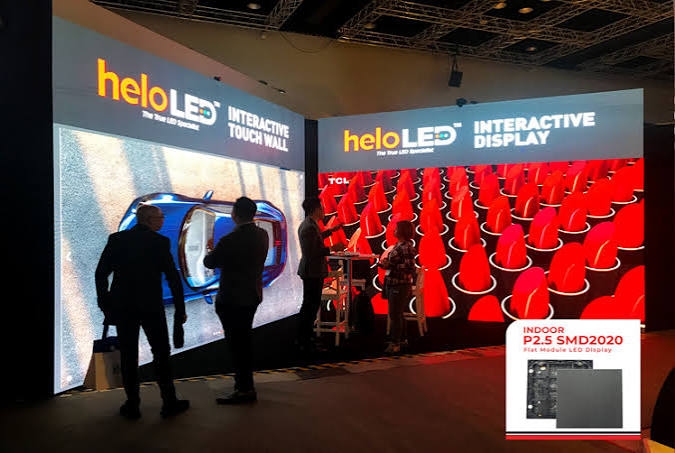
Enterprise environments increasingly rely on high-quality visual technology to communicate information, strengthen brand experiences, and create immersive spaces. From corporate headquarters and conference rooms to retail stores, control centres, showrooms, and hospitality venues, LED display technology provides a flexible alternative to traditional projection and LCD video walls.
Among the available options, fine-pitch LED technology is particularly suitable for applications where audiences view large displays from relatively close distances. Businesses looking to deploy multiple displays or large-scale visual systems may also consider wholesale LED screen solutions to simplify procurement and achieve greater cost efficiency.
This guide explains what fine-pitch LED screens are, where they are used, their advantages, and what enterprises should consider when selecting a commercial display system.
What Is a Fine-Pitch LED Screen?
A fine-pitch LED screen is a direct-view LED display that uses a small pixel pitch to produce a high-density image. Pixel pitch refers to the distance between the centres of two neighbouring LED pixels, normally measured in millimetres.
For example, a P1.2 display has a pixel pitch of approximately 1.2 mm, while a P2.5 display has a pixel pitch of approximately 2.5 mm.
The smaller the pixel pitch, the closer individual pixels are positioned to each other. This generally allows the display to produce sharper images at shorter viewing distances.
Why Pixel Pitch Matters
Pixel pitch is an important consideration when selecting an LED display because it affects image clarity, recommended viewing distance, and overall system cost.
A fine-pitch display can be beneficial when viewers are positioned close to the screen, such as in:
- Corporate meeting rooms
- Executive boardrooms
- Broadcast studios
- Retail environments
- Experience centres
- Control rooms
- Museums and exhibitions
- High-end hospitality spaces
Choosing the smallest available pixel pitch is not always necessary. The appropriate specification depends on the viewing distance, screen size, content requirements, and environment.
Why Enterprises Are Investing in Fine-Pitch LED Displays
Large organisations often require visual systems that can operate reliably for extended periods while maintaining consistent image quality. Fine-pitch LED technology offers several characteristics that make it suitable for demanding commercial environments.
Seamless Large-Format Visuals
Unlike traditional LCD video walls, LED displays do not require visible bezels between individual panels. Multiple LED modules can therefore create a large, continuous visual surface.
This is particularly useful for corporate environments where a clean and premium appearance is important.
High Image Quality
Fine-pitch technology can deliver detailed content with strong image definition, making it suitable for presentations, corporate communications, digital signage, data visualisation, promotional videos, and other high-resolution content.
When selecting an led screen, enterprises should consider the type of content that will be displayed rather than focusing only on the display’s physical size.
Flexible Screen Sizes and Configurations
LED technology can be configured into different dimensions and aspect ratios. This allows businesses to design displays around architectural spaces rather than being limited to standard television or monitor sizes.
Large LED walls can be installed in reception areas, auditoriums, meeting rooms, retail spaces, and exhibition environments.
Common Enterprise Applications for Fine-Pitch LED Screens
Fine-pitch LED technology can support a wide range of professional applications.
Corporate Offices and Boardrooms
Corporate offices increasingly use large-format displays for presentations, video conferencing, internal communications, and executive meetings.
A fine-pitch LED wall can provide a large viewing area while maintaining detailed visuals for people sitting relatively close to the display.
Control Rooms and Command Centres
Control rooms require displays capable of presenting large amounts of information clearly. Multiple data sources can be displayed simultaneously across a large LED canvas.
For these applications, businesses should evaluate brightness, reliability, viewing distance, image uniformity, and continuous operating requirements.
Retail and Showroom Environments
Retailers can use fine-pitch LED displays to create immersive product presentations and branded environments.
Instead of relying on static signage, businesses can display promotional videos, product demonstrations, campaign visuals, and interactive content.
Hospitality and Entertainment Venues
Hotels, convention centres, restaurants, theatres, and entertainment venues can use LED displays to enhance guest experiences.
Large-format LED installations can be used for event backdrops, digital signage, promotional content, stage visuals, and architectural displays.
How to Choose the Right Fine-Pitch LED Screen
Selecting an enterprise LED system involves more than choosing a pixel pitch. Several technical and commercial factors should be considered before purchasing.
1. Determine the Viewing Distance
Start by identifying how close the audience will normally be to the display.
A smaller pixel pitch is generally more appropriate when viewers are close to the screen. Displays with a larger pixel pitch may be more economical when the audience is positioned further away.
The actual requirement should be determined using the intended screen size, viewing distance, content type, and installation environment.
2. Consider Brightness Requirements
Brightness requirements depend heavily on the installation environment.
Indoor displays generally require different brightness levels from outdoor systems. A display installed in a brightly illuminated showroom may also require different specifications from one installed inside a dark conference room.
Excessive brightness in an indoor environment can reduce viewing comfort, while insufficient brightness can make content difficult to see.
3. Evaluate Refresh Rate and Image Performance
For applications involving video, live events, broadcast cameras, or fast-moving content, refresh rate is an important specification.
A suitable refresh rate can help reduce visual artefacts and improve camera performance when the LED display is filmed.
4. Check Installation and Maintenance Requirements
Enterprise LED systems should be designed with long-term maintenance in mind.
Businesses should consider module accessibility, spare parts availability, cabinet construction, power supply configuration, cooling requirements, and technical support.
For larger installations, having a clear maintenance plan can help minimise downtime.
Buying Wholesale LED Screens for Commercial Projects
Businesses managing multiple locations, large installations, or recurring projects may explore wholesale LED screen purchasing instead of buying individual displays on a project-by-project basis.
Wholesale purchasing can be particularly relevant for system integrators, AV companies, event suppliers, contractors, retailers, and businesses with multiple branches.
What to Check When Buying Wholesale
Price should not be the only consideration when evaluating a wholesale LED supplier.
Businesses should also examine:
- Pixel pitch options
- Cabinet and module quality
- LED chip and component specifications
- Brightness and refresh rate
- Warranty coverage
- Spare parts availability
- Technical support
- Delivery lead times
- Installation services
- Product consistency between batches
A lower initial purchase price may not necessarily represent better long-term value if replacement parts, maintenance, or technical support are difficult to obtain.
Fine-Pitch LED vs Traditional Display Technologies
Fine-pitch LED displays are often considered alongside LCD video walls and projectors. Each technology has different characteristics.
LCD video walls can be practical for smaller installations, but bezels become increasingly noticeable as more panels are combined.
Projectors can provide large images at relatively low initial equipment costs, but performance can be affected by ambient light and projection surfaces.
Fine-pitch LED provides a direct-view solution that can create large, seamless visual surfaces while offering flexibility in screen dimensions.
For enterprise projects, the final decision should therefore consider the installation environment, viewing distance, required image quality, screen dimensions, operating hours, and budget.
Planning a Successful Enterprise LED Installation
A successful LED project should begin with a clear technical and commercial assessment.
Define the Purpose of the Display
Determine whether the screen will primarily be used for presentations, advertising, live events, data visualisation, digital signage, video conferencing, or immersive experiences.
The intended application will influence the appropriate specifications.
Measure the Installation Space
Measure the available wall or structural area before selecting the cabinet configuration. Consider ceiling height, viewing angles, access routes, power availability, ventilation, and maintenance access.
Work With an Experienced LED Supplier
An experienced supplier can help businesses evaluate pixel pitch, screen dimensions, brightness, control systems, mounting solutions, and content requirements.
This becomes particularly important for large enterprise projects where multiple technical components need to work together.
Conclusion
Fine-pitch LED screens have become an important visual technology for enterprises seeking large, high-quality, and flexible display systems. Their seamless design, high image density, and scalable configurations make them suitable for corporate offices, control rooms, retail environments, hospitality venues, showrooms, and other commercial applications.
For organisations purchasing multiple displays or planning large-scale deployments, wholesale LED screen procurement can also provide a practical approach to managing equipment requirements and project costs.
The right solution ultimately depends on factors such as viewing distance, pixel pitch, brightness, content type, installation environment, maintenance requirements, and long-term support. By evaluating these factors before purchasing, enterprises can develop an LED visual system that meets both their current requirements and future expansion needs.
