
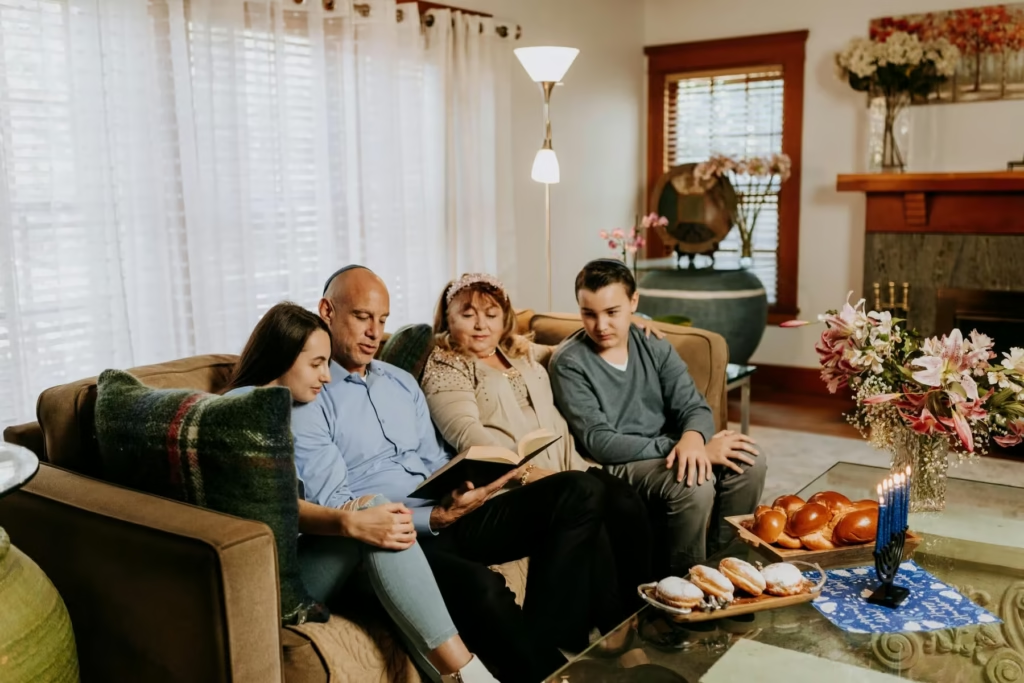
Every family carries a story. Some parts of that story are written in photographs, letters, and official records, while other parts live quietly in memories, traditions, conversations, habits, and values passed from one generation to another. A family may inherit a name, a language, a tradition, or a particular way of celebrating important moments, but the deeper inheritance is often invisible. It is found in the lessons people remember, the sacrifices they hear about, and the values they choose to carry into the future.
togel online represents this idea of timeless legacy. It is a celebration of heritage, family pride, cultural depth, memory, ritual, and love. At its heart is the belief that the past is not simply something that has already happened. It can continue to influence the present and provide direction for future generations.
What Does Sheend Represent?
Sheend can be understood as a reflection on the meaning of heritage and the emotional connection people have with their family history.
Heritage is much more than an old tradition or a family name. It includes the stories, principles, customs, experiences, and memories that shape how generations understand themselves.
Every family has its own identity.
Some families preserve recipes that have been prepared for decades. Others maintain traditional celebrations, songs, clothing, crafts, languages, or ceremonies. Some traditions are highly visible, while others are simple habits practiced within the privacy of a home.
Sheend celebrates both.
The Meaning of Timeless Legacy
A legacy is something that continues after the person who created it is gone.
It can be material, such as property, photographs, books, or objects. But some of the most meaningful legacies cannot be held in the hands.
A parent may leave behind a lesson about honesty. A grandparent may teach patience through years of example. An older family member may pass down a tradition that eventually becomes an important part of family identity.
These lessons can survive for generations.
This is what makes legacy timeless. It does not depend entirely on physical objects. It lives through people.
Family as the Keeper of Memory
Families are often the first places where people encounter history.
A child may learn about previous generations through stories told around the dinner table. They may hear about difficult periods, celebrations, migrations, achievements, losses, friendships, and moments that shaped the family.
These stories can become part of personal identity.
Even when someone never met a particular ancestor, learning about that person’s life can create a sense of connection.
Memory therefore becomes a bridge between generations.
The Unseen Strength Within Families
Family strength is not always obvious.
It may not appear in public achievements or dramatic moments. Sometimes strength is visible in ordinary actions: caring for relatives, protecting traditions, supporting children, surviving difficult circumstances, or continuing to hope during challenging periods.
Many families have stories of people who quietly carried responsibilities without receiving recognition.
Their strength may never have been documented in books, but it influenced everyone who came after them.
Sheend honors this unseen strength.
It recognizes that the foundation of a family is often built by people whose contributions were simple, private, and deeply meaningful.
Pride in Heritage
Pride in heritage does not necessarily mean believing that one culture or family is better than another.
Healthy cultural pride is about appreciating where one comes from and understanding the experiences that shaped previous generations.
Knowing family history can provide a stronger sense of identity.
It can help people understand why certain traditions exist, where particular customs originated, and how earlier generations adapted to changing circumstances.
Heritage becomes especially meaningful when it is understood rather than simply repeated.
Traditions Passed Through Generations
Traditions give families a way to preserve continuity.
A tradition might be a yearly celebration, a particular meal, a ceremony, a song, a story, or a way of welcoming guests.
What makes a tradition powerful is repetition.
When the same meaningful practice appears across generations, it creates a sense of connection between people who may have lived in completely different circumstances.
A grandparent and grandchild may have little else in common on the surface, yet they may share a familiar family tradition.
That shared experience creates continuity.
The Importance of Ritual
Rituals often mark important moments in life.
Births, marriages, celebrations, religious or cultural occasions, coming-of-age experiences, memorials, and family gatherings may all include rituals that have been practiced for many years.
Ritual gives structure to memory.
It allows people to recognize important transitions and share them with others.
Even simple rituals can become deeply meaningful because their emotional value grows through repetition.
Over time, a familiar practice may remind someone of parents, grandparents, childhood, and earlier family gatherings.
Memory and Emotional Connection
Memory is one of the strongest ways people maintain connections with the past.
A photograph can bring back a moment. A familiar song can remind someone of a particular person. A traditional meal can recreate the feeling of a family gathering.
These experiences show that heritage is not always intellectual.
It is emotional.
People often remember the feeling associated with an experience as much as the details themselves.
Sheend’s celebration of memory recognizes this emotional dimension of heritage.
Stories as a Form of Inheritance
Stories are among the simplest ways to preserve family history.
A story does not need to describe a famous event to be valuable.
A grandmother’s childhood memory, a parent’s account of starting a career, or an ancestor’s journey to a new place can provide insight into the lives of earlier generations.
These stories can teach resilience, humility, courage, responsibility, and gratitude.
The act of telling them also keeps them alive.
When stories stop being shared, parts of family history can disappear.
Cultural Depth and Identity
Culture gives communities a shared framework for understanding life.
Language, food, music, art, clothing, customs, celebrations, and social practices all contribute to cultural identity.
However, culture is not frozen in time.
Every generation adds something new.
Young people may preserve traditional practices while adapting them to modern circumstances. A traditional celebration might take place in a different setting. A family recipe may be prepared with new techniques. A language may gain new expressions.
This evolution does not necessarily weaken heritage. It can help heritage remain alive.
Passing Values to the Next Generation
Perhaps the most important part of a legacy is the values that survive.
Objects can disappear. Buildings can change. Technology becomes outdated. But values can continue through behavior.
Honesty, compassion, responsibility, perseverance, respect, generosity, patience, and courage can be taught through everyday examples.
Children often learn values by observing how adults behave.
A parent who treats others with kindness demonstrates more than any written lesson could explain.
This is why family legacy is closely connected to action.
Love as the Foundation of Heritage
Heritage can sometimes feel like a collection of names, dates, places, and traditions.
But behind those things are relationships.
Love gives memories their emotional meaning.
A family tradition matters because people gathered together. A photograph matters because of the people in it. A story matters because it connects someone to another life.
Love turns history into something personal.
Without emotional connection, heritage can become an archive. With love, it becomes something that people continue to experience.
Remembering Those Who Came Before
Honoring previous generations does not mean idealizing them.
Every family has complicated histories. Earlier generations faced challenges, made mistakes, adapted to circumstances, and made decisions based on the knowledge available to them.
Remembering them honestly can provide valuable lessons.
Their successes can inspire. Their struggles can teach. Their mistakes can help future generations make different choices.
True remembrance allows both appreciation and reflection.
The Role of Younger Generations
Heritage survives only when younger generations choose to engage with it.
They may ask questions, record stories, learn traditional skills, preserve photographs, or participate in cultural events.
Technology can also help.
Families can create digital archives, organize photographs, record interviews with older relatives, or document traditions through video and audio.
These tools can make preservation easier while allowing younger people to interact with history in ways that feel natural to them.
Creating a Living Legacy
A legacy is not only something inherited.
It is also something created.
Every generation adds new experiences to the family story.
A young person who learns from their family’s past can also create new traditions. They may introduce new celebrations, document family history, build a creative project, or teach younger relatives something they learned.
In this way, heritage becomes a living process.
The past influences the present, and the present becomes part of the future.
Why Heritage Matters in a Changing World
Modern life can change quickly.
People move between cities and countries, families become more geographically separated, technology changes communication, and traditional lifestyles may evolve.
In such an environment, heritage can provide continuity.
Knowing where we come from can offer a sense of grounding while we navigate change.
Heritage does not need to prevent progress. Instead, it can provide context.
A person can embrace modern opportunities while still remembering the people, values, and traditions that shaped their family.
Preserving Family Heritage
Preserving heritage does not have to be complicated.
Families can begin by collecting old photographs and identifying the people shown in them. They can write down family stories, record conversations with older relatives, preserve traditional recipes, or create a simple family timeline.
Even a handwritten notebook can become valuable to future generations.
The most important thing is to start before memories disappear.
Older relatives often carry information that exists nowhere else.
Their voices, stories, experiences, and perspectives are irreplaceable.
Sheend and the Meaning of Continuity
At its deepest level, Sheend is about continuity.
It recognizes that people are connected to those who came before them and can influence those who come after them.
A family does not exist only in the present moment. It is part of a longer story.
Every generation receives something and then has the opportunity to preserve, improve, reinterpret, or expand it.
That is the beauty of legacy.
Final Thoughts
Sheend celebrates the idea that heritage is not simply a record of the past. It is a living connection between generations.
Through family stories, traditions, rituals, memories, values, and acts of love, people carry pieces of history into the future.
The strongest legacies are often invisible. They may exist in the way someone treats another person, the values they teach their children, the traditions they preserve, or the stories they continue telling.
Cultural heritage gives people a sense of belonging. Family history provides context. Memory keeps relationships alive. Ritual creates continuity. Love gives all of these things meaning.
In a rapidly changing world, remembering where we come from can help us understand who we are and what we want to leave behind.
Sheend is ultimately a celebration of that connection—the quiet strength of families, the depth of cultural memory, the pride found in heritage, and the responsibility each generation carries to preserve meaningful values while creating something new.
