
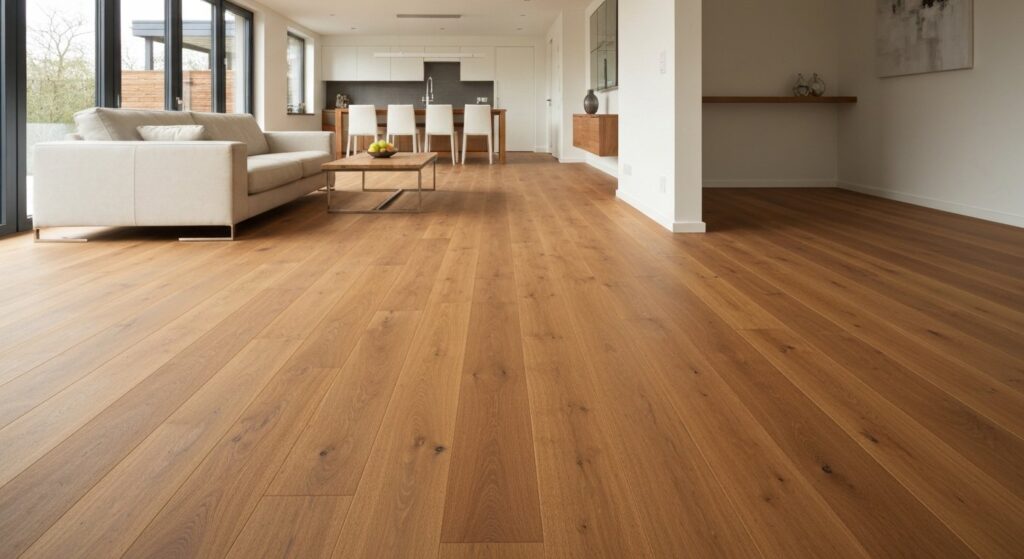
There is a reason wood floors never go out of fashion: grain, warmth and character make a room feel finished in a way plain surfaces rarely do. The problem is that real timber demands sanding, sealing and constant vigilance around water. Spc wood flooring offers a different bargain: planks that reproduce the appearance of oak, walnut or ash in fine detail, built on a rigid waterproof core that asks for almost nothing in return. This article looks at how realistic the effect has become, where it works best, and how to choose shades and formats that flatter your space.
How the Wood Effect Is Created
Modern SPC planks start with high-definition photography of real timber, capturing not just colour but the knots, mineral streaks and saw marks that make each board individual. That image is printed onto the plank and protected by a transparent wear layer, and the best products add embossing that follows the printed grain, so your fingertips feel the texture your eyes see. Manufacturers vary the pattern across many different plank designs in each pack, which avoids the repeating, artificial look that gave early vinyl floors a bad name. Lay a good sample beside real oak and most visitors cannot tell them apart.
Shades and Species to Consider
Light Scandinavian oaks remain the most popular choice, brightening small rooms and pairing easily with white walls and modern furniture. Mid-tone natural oak is the safe all-rounder, hiding dust well and suiting both traditional and contemporary schemes. Dark walnut effects create a dramatic, cocooning feel in dining rooms and studies but show crumbs and pet hair more readily. Grey-washed planks have cooled in popularity yet still work beautifully in coastal and minimalist interiors. Whatever you choose, view large samples at home in daylight and lamplight, because screen images and showroom lighting both lie about colour.
Plank Sizes, Herringbone and Layout Patterns
Format changes the personality of a floor as much as colour does. Long, wide planks make open-plan spaces feel calm and expansive, with fewer joints interrupting the grain. Standard-length planks suit smaller rooms where long boards would need constant cutting. Some ranges now offer herringbone and chevron formats in Spc wood flooring, letting you recreate the classic parquet look of period homes on a waterproof, click-fit base, a combination that would have been impossible a decade ago. Whichever pattern you pick, order from one production batch so colour and embossing match across the whole floor.
Where Wood-Effect SPC Works Best
Living rooms and bedrooms gain the warmth of timber with none of the draughts or creaks of old boards. Kitchens and bathrooms, traditionally closed to real wood, can now carry the same wood effect as the rest of the home, giving that continuous, flowing look designers love. Hallways benefit most of all: the busiest strip in the house gets a surface that looks like premium oak but treats muddy boots and pushchair wheels as a minor inconvenience. Because the core is stable in sunlight, conservatories and rooms with full-height glazing are also safe territory where real wood would fade and move.
Comfort, Warmth and Acoustics
A common worry is that a wood-effect floor will feel cold or hard compared with the real thing. In practice the rigid core sits over an attached cushioned underlay on most quality products, which takes the edge off the hardness and noticeably reduces footstep noise, a real benefit in flats and upstairs rooms. The surface reaches room temperature quickly and works efficiently over underfloor heating, since the thin, dense plank transfers heat far better than thick timber. Add a rug where you want softness, and the room keeps the clean look of boards with the comfort of a textile where it matters.
Value Compared With Real Timber
Quality engineered oak costs several times more per square metre before fitting, and solid wood adds professional installation, acclimatisation time and finishing products to the bill. SPC delivers the same visual result for a fraction of the total spend, can be fitted by a competent DIYer in a weekend, and starts working immediately with no curing or drying time. If the floor ever needs to change, for a sale, a re-let or a new look, it unclicks and lifts cleanly, leaving the subfloor ready for whatever comes next.
Care That Takes Minutes, Not Weekends
Real wood asks for oiled finishes to be renewed, scratches to be sanded out and water to be feared. SPC asks for a brush, a vacuum and an occasional damp mop with a mild cleaner. There is no waxing, no sealing and no special polishes, and scuffs from shoe heels usually wipe away. Furniture pads prevent the few marks that matter, and because the colour runs through a printed layer protected by the wear coat, everyday scuffs do not expose pale raw wood the way they do on a scratched solid board. For busy households, that difference in effort is the whole point.
Getting the Realistic Result You Want
Realism lives in the details: choose a matt finish rather than a glossy one, insist on embossed texture that matches the grain, and pick a product with plenty of pattern variation. Lay planks in a random stagger, mix boards from several packs as you go, and keep the bevel subtle, because deep grooves between planks collect dirt and break the illusion. Finish with skirting or beading that matches your paintwork rather than the floor. Do those things and guests will admire your beautiful wooden floor; almost none of them will ever guess what it is actually made from.
