
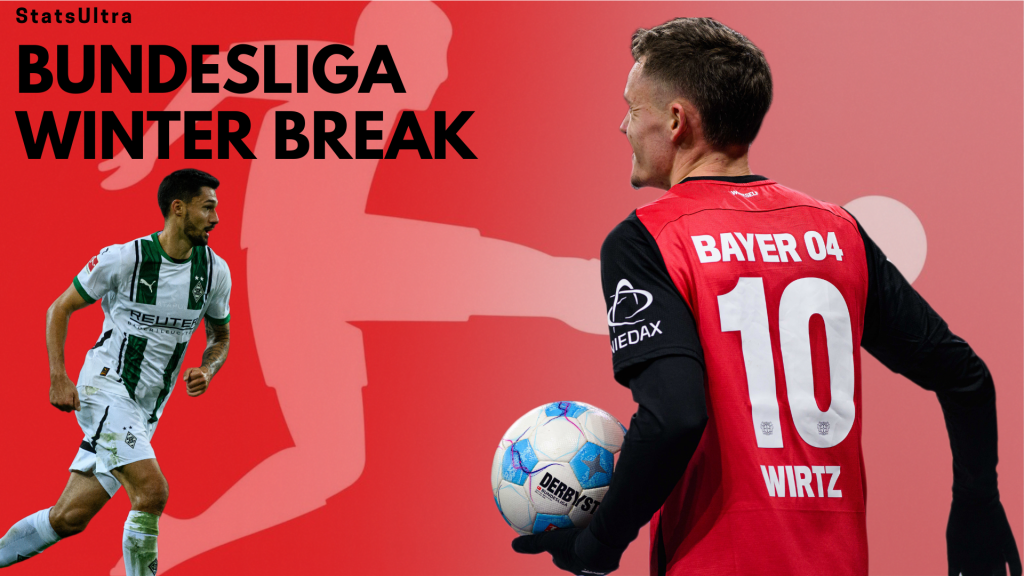
Comparing past Bundesliga data with the 2024/25 season is one of the most direct ways to tell whether you are seeing true tactical and statistical shifts or just short‑term noise. When this comparison is done systematically—by defining which metrics matter and how large a change needs to be before you call it a “trend”—it turns historical numbers from trivia into a practical guide for how to interpret the current campaign.
Why comparing seasons is a reasonable way to look for new trends
Historical data provides a baseline for what is “normal” in a league—goals per game, chance quality, defensive strength—so deviations from that baseline are often the first sign of emerging trends. In the Bundesliga, where recent seasons have already been high‑scoring, tracking whether 2024/25 continues or breaks those patterns helps you understand if tactics or squad builds are shifting in a meaningful way. Without this context, it is easy to overreact to a handful of wild games in August and September, mistaking variance for a new style of football.
Why a data‑driven betting perspective fits this question best
Looking for “new trends” is only useful if it eventually informs your decisions about matches and markets, not just your conversations about the league. A data‑driven betting perspective treats each comparison as an input into probability estimates—of goals, match dominance, or tactical patterns—rather than as a narrative endpoint. From this angle, the value of past‑versus‑present analysis lies in whether it helps you predict what will happen next more accurately than simply reading current standings or watching highlight clips.
Selecting the right metrics to compare across seasons
Not every stat is equally helpful when you are trying to detect structural change. League‑level figures such as goals per game, average expected goals (xG), and shot volume give a broad sense of pace and attacking intent, while team‑level xG, xGA, and chance quality indicators help you see whether specific clubs are evolving or regressing. Websites that aggregate Bundesliga xG and related advanced metrics use shot location, frequency, and attacking pressure to produce more nuanced measures than raw goals alone, which makes them particularly useful for separating sustainable trends from finishing streaks.
Mechanism: from raw numbers to structural changes
When the Bundesliga’s goals‑per‑game and xG‑per‑game both increase compared with previous seasons, that suggests not just better finishing but more aggressive tactics, more high‑quality chances, or looser defending. If goals rise while xG stays flat, it points more toward clinical forwards or unusually weak goalkeeping, outcomes that are less likely to persist over a full multi‑year cycle. By distinguishing between these scenarios, you can judge whether to expect continued high totals or some reversion toward historical averages.
A step‑by‑step process for comparing previous seasons with 2024/25
Because Bundesliga data now includes detailed historical and current xG tables, shot stats, and outcome summaries, the main challenge is imposing a structured process on how you compare them. A repeatable sequence allows you to move from a league‑level view into team‑specific insights without cherry‑picking only the numbers that fit a preconceived story. This structure is what turns “checking last season” from a casual glance into a trend‑spotting routine you can use throughout 2024/25.
Before listing the sequence, imagine a typical analysis session: you have last season’s summary on one screen and 2024/25 stats on another, and you want to know whether the league’s attacking environment has materially changed. The steps below keep that question central rather than getting lost in isolated curiosities.
- Start at league level by noting last season’s goals per game and any published average xG per match, then compare those with current 2024/25 figures.
- Identify whether changes are broad (affecting most teams) or concentrated in a few sides by checking team‑level xG and xGA tables across seasons.
- For teams showing the biggest shifts, drill into shot volume, chance quality, and home/away splits to see whether tactical adjustments or personnel changes plausibly explain the numbers.
- Cross‑check narrative pieces or official league summaries that highlight “biggest trends” of 2024/25—such as goal totals, super‑sub impacts, or specific tactical wrinkles—to anchor your findings in observed match patterns.
- Translate observed differences into forward‑looking hypotheses (“this team’s attack is genuinely stronger”, “league‑wide defense is looser”, “late goals are more frequent”) that you can test against upcoming fixtures rather than treating them as settled facts.
Following this sequence helps ensure that any “new trend” you claim to see is supported by both aggregate numbers and plausible football reasons, reducing the risk of overfitting to one surprising season. Over time, you can refine the process by dropping metrics that rarely inform decisions and adding those that correlate well with match outcomes or market mispricing.
Where UFABET fits into a stats‑first workflow
When historical comparisons lead to betting decisions, the environment where you place those bets can either support or derail your discipline. Consider a bettor who uses third‑party stats sites to compare 2023/24 and 2024/25 Bundesliga data, then turns to ufa168 as a sports betting service to act on those insights: in this scenario, the service becomes the execution layer where you convert statistically grounded hypotheses into specific markets, odds, and stake sizes, rather than the starting point of your reasoning. The balance between process and impulse depends on whether you arrive at the service with pre‑identified matches and markets based on your trend work, or whether you adjust your conclusions on the fly in response to how attractive the odds look on screen.
Using lists to organise trend hypotheses without losing nuance
Once you have compared past and present data, it is tempting to summarise findings in short slogans—“more goals”, “weaker defending”—that oversimplify reality. Instead, it can be more useful to write out a concise list of candidate trends, each tied to specific metrics and accompanied by a clear football explanation. This format keeps your thinking grounded and makes it easier to test ideas against future matches without treating them as certainties.
Illustrative list: candidate trends from comparing seasons
- League‑wide scoring: If 2024/25 goals per game are slightly lower than in 2023/24 but still remain high by historical standards, you might argue that the Bundesliga continues to be attack‑oriented but is no longer accelerating offensively year on year.
- Chance quality: A rise in average xG per match combined with only a modest change in actual goals suggests that teams are creating better chances but finishing variance has capped the scoreboard impact, pointing to potential value in goals markets if perception lags behind stats.
- Defensive profiles: Teams whose xGA has worsened significantly versus last season, without a corresponding increase in offensive output, may be drifting toward high‑risk, low‑control styles that lead to more volatile scorelines and potentially mispriced handicaps.
Writing trends this way forces you to link data and mechanism—how teams are playing—not just to note that numbers have shifted. It also creates an immediate to‑do list: for each candidate trend, you can monitor relevant future matches to see whether behaviour continues or reverts, updating or discarding ideas as evidence accumulates.
Recognising the limits and failure points of historical comparisons
Historical data can mislead as easily as it can inform when underlying conditions change, and Bundesliga seasons are not interchangeable. New managers, key transfers, tactical innovations, and even rule tweaks or refereeing directives can break the link between last year’s numbers and this year’s environment, making some comparisons less predictive. External factors—condensed schedules, injuries to star players, or unusual weather—can also distort a single season, creating apparent trends that disappear once conditions normalise.
Conditional scenarios: when to trust and when to down‑weight past stats
There are situations where previous seasons are especially informative and others where they should be treated with caution. When a club has continuity in coaching, squad core, and playing style, multi‑year stats provide a strong base for evaluating whether 2024/25 performance is out of character or part of a steady arc. By contrast, when teams undergo major tactical overhauls or bring in high‑impact players—reflected in articles highlighting “biggest stories” of a new season—the direct carry‑over value of last year’s numbers diminishes, and you should rely more heavily on current‑season data and eye‑test observations.
Table: mapping metrics from last season to 2024/25 questions
One way to make historical comparisons practical is to think of each major metric as asking a specific question about the new season rather than simply reporting a value. The table below pairs common Bundesliga stats from previous campaigns with the forward‑looking questions they help you pose about 2024/25.
| Metric from previous season | 2024/25 comparison focus | Question it helps answer |
| League goals per game | Has scoring increased, decreased, or stabilised relative to xG? | Are tactics and refereeing trends pushing toward more open or more controlled matches? |
| Team xG and xGA | Are clubs creating and conceding chances at similar levels? | Is a team’s current table position supported by underlying performance or by finishing/goalkeeping variance? |
| Shot volume and shot quality | Has a team changed style—fewer but better shots, or many low‑quality efforts? | Should you expect sustainable attacking output or a likely regression? |
| Role of super‑subs and late goals | Are late scoring patterns continuing or fading? | Do in‑play strategies around second‑half goals still make sense given new season dynamics? |
Seeing metrics this way turns the comparison exercise into a set of concrete questions about how 2024/25 is evolving rather than into a hunt for confirmation of your pre‑season opinions. It keeps analysis anchored in football logic—styles, roles, and game states—while still respecting the informational weight of historical data.
How casino online environments can distort your reading of trends
Even the best historical analysis can lose impact if it is consumed or applied inside high‑stimulation gambling environments. When Bundesliga stats and articles are reviewed in a browser alongside a casino online website, the rapid feedback loops of quick‑turnover games can shift focus from long‑term patterns to short‑term excitement, encouraging you to treat trends as justification for immediate, aggressive bets rather than as tools for steady, probability‑based decisions. Over time, this environment makes it harder to patiently test hypotheses across many matches, which is the only way to know whether a perceived new trend is robust or simply a short‑lived coincidence.
Summary
Using previous Bundesliga seasons to interpret 2024/25 is most powerful when you treat historical stats as benchmarks for specific questions—about goals, chance quality, and team evolution—rather than as static reference points. By choosing key metrics, following a structured comparison routine, and translating observed differences into testable, football‑based hypotheses, you can distinguish genuine new trends from random clusters of results. The approach works best when you protect it from impulse‑driven betting contexts, use execution tools in service of pre‑formed ideas, and remain willing to revise or abandon early conclusions as more 2024/25 data arrives.
