
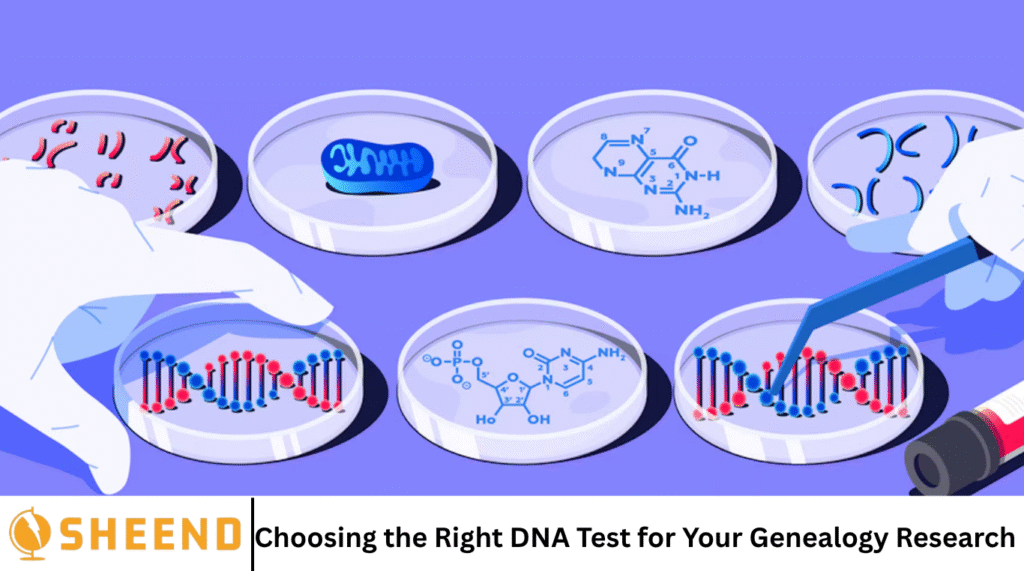
Genealogy research has seen a revolutionary shift over the past decade thanks to DNA testing. What once relied solely on paper records, oral histories, and painstaking detective work now benefits from genetic insights that help uncover family connections, ethnic origins, and ancestral migration patterns. However, with multiple DNA testing options available, choosing the right test for your genealogy research can feel overwhelming.
This comprehensive guide will help you understand the different types of DNA tests, their purposes, how to interpret results, and which test best fits your genealogy goals. By the end, you’ll be equipped to make an informed decision that brings your family tree to life with genetic data.
More Read: Family History Research for Beginners
Understanding DNA Testing for Genealogy
DNA testing for genealogy uses biological samples (usually saliva or cheek swabs) to analyze your genetic code. The results provide insights about your ancestors, relatives, ethnic background, and sometimes even health-related traits. The field has grown rapidly, with many companies offering different types of tests, each designed to reveal specific genetic information.
The Three Main Types of DNA Tests for Genealogy
Before choosing a test, it’s important to understand the three primary DNA tests used in genealogy:
- Autosomal DNA Testing
- Y-DNA Testing
- Mitochondrial DNA (mtDNA) Testing
Each test examines different parts of your DNA and serves distinct purposes in genealogy research.
Autosomal DNA Testing
Autosomal DNA tests analyze the 22 pairs of non-sex chromosomes inherited from both parents. Because this DNA is a mix from all recent ancestors, it’s useful for discovering relatives across both maternal and paternal lines within roughly the last 5-7 generations.
Why choose autosomal DNA?
- Provides ethnicity estimates.
- Connects you with cousins and close relatives.
- Useful for general family tree research.
- Can reveal unknown or unexpected family connections.
Limitations:
- Less effective for deep ancestry beyond 5-7 generations.
- Cannot distinguish between maternal and paternal origins without additional context.
Y-DNA Testing
Y-DNA testing analyzes the Y chromosome, which only males inherit from their fathers. It traces the paternal lineage directly and can reveal your paternal haplogroup (a group of related ancestors) and connections to other men sharing the same direct paternal line.
Why choose Y-DNA?
- Ideal for tracing the direct male line (surname studies).
- Helps identify paternal haplogroups and migration routes.
- Useful for confirming paternal lineage in cases of adoption or unknown parentage.
Limitations:
- Only males can take this test (females cannot, but can ask a male relative to test).
- Focuses solely on one ancestral line (father’s father’s father, etc.).
- Less useful for broad genealogical connections.
Mitochondrial DNA (mtDNA) Testing
Mitochondrial DNA is passed down from mothers to both sons and daughters, but only daughters continue to pass it on. mtDNA testing traces your direct maternal line and can reveal your maternal haplogroup and ancient maternal origins.
Why choose mtDNA?
- Useful for tracing the maternal line.
- Reveals deep maternal ancestry.
- Helpful in confirming maternal heritage and ancient migration.
Limitations:
- Focuses on just one lineage (mother’s mother’s mother, etc.).
- Less effective for connecting with close relatives compared to autosomal testing.
Popular DNA Testing Companies for Genealogy
Several companies dominate the DNA genealogy testing market. Each offers various tests and unique features that might influence your choice.
AncestryDNA
- Offers comprehensive autosomal DNA testing.
- Large user database for better cousin matching.
- Provides ethnicity estimates and family tree integration.
- Ideal for users with existing Ancestry.com family trees.
23andMe
- Offers autosomal testing plus health-related genetic reports.
- Provides detailed ancestry composition.
- Includes Neanderthal ancestry reports.
- Good for users interested in both genealogy and health.
MyHeritage DNA
- Autosomal testing with a strong European database.
- Offers ethnicity estimates and DNA matching.
- Known for international user base and tools for family tree building.
FamilyTreeDNA
- Offers autosomal, Y-DNA, and mtDNA testing.
- Strong in paternal and maternal lineage research.
- Good for advanced genealogists focusing on specific lines.
Living DNA
- Autosomal testing with a focus on detailed regional ancestry (especially in the UK).
- Provides breakdowns of ancestry within specific countries.
How to Choose the Right DNA Test for Your Genealogy Research
Choosing the right test depends on your goals and what you want to learn about your family history. Consider the following:
Define Your Research Goals
- Are you interested in discovering your ethnic background?
- Do you want to find living relatives and connect your family tree?
- Are you researching a specific paternal or maternal lineage?
- Do you want to verify or disprove a family story or adoption?
Decide Which Lineage Matters Most
- Paternal Line: Choose Y-DNA testing (if male) or ask a male relative to test.
- Maternal Line: Choose mtDNA testing.
- Both Lines / Broad Family Connections: Autosomal DNA is best.
Consider Your Gender
- Females cannot take Y-DNA tests but can benefit from autosomal and mtDNA tests.
- Males can take all three types of tests.
Evaluate Company Databases and Tools
- Larger databases mean better chances of matching relatives.
- Look for integration with family tree platforms for more detailed research.
- Some companies offer ethnicity estimates with different levels of regional detail.
Budget and Cost
- Autosomal DNA tests typically range from $60 to $100.
- Y-DNA and mtDNA tests are usually more expensive, especially for advanced marker testing.
- Some companies offer bundled testing options.
Interpreting Your DNA Test Results
After submitting your sample, you’ll receive a report with various details depending on the test:
Ethnicity Estimates
- Breaks down your genetic heritage into geographic regions.
- Results may vary between companies due to different reference populations.
- Useful for broad ancestral understanding but not always precise.
DNA Matches and Cousin Finding
- Identifies people who share DNA segments with you.
- Helps you find living relatives and potentially unknown branches of your family tree.
Haplogroups
- Defines your paternal (Y-DNA) or maternal (mtDNA) ancient lineage.
- Offers insights into where your direct ancestors lived thousands of years ago.
Genetic Traits and Health (Optional)
- Some companies provide optional reports on health risks and traits.
- Separate from genealogical insights but may interest some users.
Tips for Maximizing Your DNA Test Results in Genealogy Research
- Build and share your family tree: Connect your DNA results with documented family history.
- Upload raw data to multiple databases: Some companies allow you to upload raw DNA data to other sites to increase your chances of finding matches.
- Communicate with DNA matches: Reach out to relatives to exchange information and collaborate.
- Use third-party tools: Tools like GEDmatch and DNA Painter can help interpret and visualize your results.
- Stay patient and curious: New matches and insights often emerge over time as databases grow.
Ethical Considerations and Privacy
When choosing a DNA test, consider the privacy policies and data-sharing practices of the company. Some companies share data with third parties or law enforcement, which may concern some users. Always read the terms carefully and opt out of sharing if privacy is a priority
Frequently Asked Questions
Which DNA test is best for genealogy beginners?
For beginners, autosomal DNA testing from companies like AncestryDNA or 23andMe is recommended because it provides broad family connections and ethnicity estimates.
Can I take more than one DNA test?
Yes! Many genealogists take multiple tests to get a fuller picture—autosomal for broad connections, Y-DNA or mtDNA for direct paternal or maternal lines.
How accurate are ethnicity estimates?
Ethnicity estimates are generally good for broad regions but can vary between companies. They improve over time as reference databases grow.
Can a female take a Y-DNA test?
No. Only males inherit the Y chromosome. Females interested in paternal line testing can ask a male relative (father, brother, uncle) to test.
How long does it take to get results?
Typically, autosomal test results take 4-8 weeks, while Y-DNA and mtDNA tests might take longer, depending on the company.
Is my DNA data safe?
Most companies have privacy policies outlining how data is stored and shared. You can usually opt out of sharing your data with third parties.
Can DNA testing help with adoption research?
Yes, DNA testing is a powerful tool for adoptees seeking biological relatives and heritage information.
Conclusion
Choosing the right DNA test for your genealogy research is an exciting step toward uncovering your family’s past. By understanding the different types of tests, your research goals, and the strengths of each testing company, you can select the option that best suits your needs. DNA testing has opened a new world of possibilities, turning your family tree from a paper project into a living genetic story.Ready to start your journey? Pick a test, submit your sample, and prepare to connect with your ancestors like never before.