
Family history doesn’t have to start with dusty libraries or confusing DNA charts. It can begin right at your kitchen table, sparked by a box of old photographs, a story your grandmother told you once, or the curiosity of a child asking, “Where did we come from?” Genealogy can seem overwhelming at first, but the truth is, getting started is easier—and more rewarding—than most people think.
In this guide, we’ll explore 12 beginner-friendly family history projects that are fun, meaningful, and simple to undertake. Whether you want to build a family tree, preserve stories, or create keepsakes, these projects will help you explore your roots and bring your heritage to life—one story at a time.
Have you ever wondered where your family came from, what your ancestors were like, or what stories have been passed down through generations? Family history is more than names on a family tree—it’s a living connection to the people who shaped your life long before you were born.
More Read: Is There a Perfect First Step to Writing Your Family History?
Why Family History Matters
Understanding where you come from helps you better understand who you are. Studies have shown that children who know more about their family history tend to have higher self-esteem, lower anxiety, and a stronger sense of identity. On a practical level, family history can also provide insight into health risks, migration patterns, and cultural traditions that influence daily life.
Whether you’re doing this for yourself, your children, or future generations, these 12 simple projects will help you lay the foundation for a rich and meaningful family legacy.
Start a Simple Family Tree
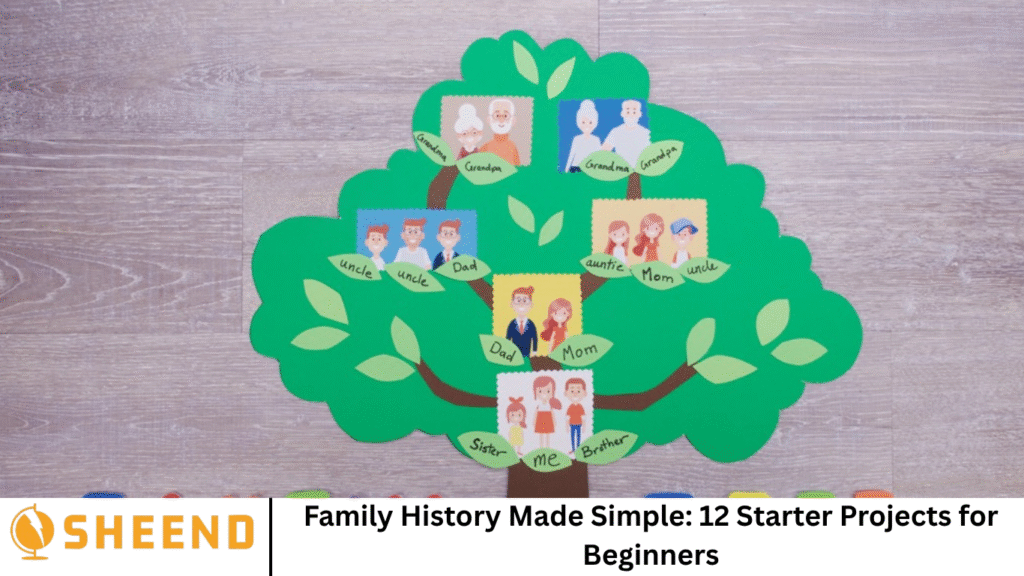
The classic starting point for any genealogical journey is the family tree. Begin by charting yourself, your parents, grandparents, and great-grandparents if possible. Include names, birth/death dates, marriage details, and places.
Tools: Use online tools like Ancestry.com, FamilySearch.org, or even printable tree templates. Don’t worry if you don’t know everything yet—the idea is to start with what you know and build from there.
Record an Interview with a Relative
Older relatives are living libraries of stories, dates, customs, and places. Set up a voice recorder or camera and ask them about their childhood, family traditions, careers, or wartime experiences.
Tip: Use open-ended questions like “What was your school like?” or “How did you meet Grandpa?” Their answers might surprise you—and preserve a bit of living history.
Collect and Label Old Photographs
Everyone has that mystery box of old photos tucked away. Gather them, scan them, and—most importantly—label them. Write who’s in the photo, the year, and the place. If you’re not sure, ask family members for help.
Bonus Project: Create a photo album with dates and stories attached to each picture.
Write Your Own Life Story
Yes, you! You’re part of your family history, too. Start journaling your experiences, beliefs, travels, and turning points. Don’t worry about writing perfectly—focus on being honest and detailed.
Prompts: First job, major decisions, biggest challenges, best vacations, and lessons learned.
Create a Family Recipe Book
Food is a powerful connector across generations. Collect beloved family recipes—whether it’s your grandmother’s apple pie or your uncle’s barbecue sauce—and compile them into a keepsake book.
Add Value: Include photos of the dishes and short stories about the meals, holidays, or people associated with them.
Map Your Family Migration
Where did your ancestors come from? Use a printed or digital map to trace their journey from cities or countries of origin to where your family lives now.
Use Google Maps or MyHeritage to make this visual and interactive. It’s a great way to show how your family has moved and evolved.
Make a Family Time Capsule
Fill a box with meaningful items: letters, photos, drawings, newspaper clippings, or a USB with video recordings. Seal it with a note to future generations and a “do not open until” date.
Fun Idea: Bury it in the backyard or store it in a safe place for kids to open 10–20 years from now.
Celebrate a “Heritage Day”
Pick a day to honor your family’s roots. Cook traditional meals, play old music, dress in cultural attire, or watch documentaries about your ancestral homeland.
Involve Kids: Have them create flags, write family poems, or act out a family story like a play.
Research Your Last Name
What does your surname mean? Where did it originate? This can lead to fascinating discoveries about migration, occupation, and language roots.
Resources: Websites like BehindTheName.com and HouseOfNames.com offer insights into surnames and heraldry.
Preserve Family Documents
Old letters, diaries, birth certificates, and passports often hold untapped history. Digitize them for preservation and share them with relatives.
Tip: Store originals in acid-free sleeves or envelopes to prevent deterioration.
Make a Family Tree Wall Display
Turn your genealogical efforts into a beautiful visual centerpiece. Use photos and names in a creative format—tree branches, circles, timelines—to display in your home.
It’s both décor and legacy, sparking conversations for years to come.
Create a “Who’s Who” Family Bio Book
Interview several relatives or write short bios for family members (living or deceased) to compile into a simple book. Include photos, major life milestones, careers, hobbies, and personality quirks.
Goal: Paint a portrait of your family across generations—not just names and dates, but who they were as people.
How to Stay Organized
As you begin these projects, staying organized is key:
- Create digital folders for photos, documents, and recordings.
- Keep a master family tree that you update regularly.
- Use genealogy notebooks or apps to keep track of sources and questions.
Pro Tip: Always date your materials and back them up on cloud storage or external drives.
Common Beginner Mistakes to Avoid
- Not labeling documents/photos right away.
- Failing to back up digital files.
- Taking oral stories at face value without confirming dates or places.
- Getting overwhelmed by trying to do too much at once.
- Ignoring the stories of female relatives (they often have less-documented roles).
Frequently Asked Question
Do I need to pay for a service like Ancestry.com to start researching my family history?
Not necessarily. Many free resources exist like FamilySearch.org and your local libraries or historical societies. Paid services can help later for deeper searches or DNA tests, but beginners can go far with free tools.
What if I don’t have any old photos or documents?
Start with interviews and stories. Ask relatives what they remember. You can also search public records and local archives, or reach out to extended family who might have hidden treasures.
How do I get my children interested in family history?
Involve them in hands-on projects like making a family cookbook, crafting a family tree with photos, or celebrating a heritage day. Make it interactive and fun—turn stories into games, art, or adventures.
How can I verify if a family story is true?
Look for supporting evidence in census records, military documents, newspapers, or birth/death certificates. Not all stories can be confirmed, but many have kernels of truth waiting to be uncovered.
Is it okay to include sensitive information, like adoption or past criminal records?
This depends on your purpose and audience. For private documentation, honesty is best. For public sharing, tread respectfully. Always consider how the information might affect living relatives.
What’s the best way to store and preserve family history items?
Use acid-free sleeves, boxes, and albums. For digital files, scan at high resolution, organize by date or subject, and back up regularly. Label everything clearly to avoid confusion later.
How long does it take to build a complete family tree?
It’s an ongoing journey. You can create a basic tree in an afternoon, but tracing back multiple generations could take weeks, months, or years depending on record availability and family complexity.
Conclusion
Starting your family history doesn’t require a degree in genealogy or expensive tools. With curiosity and a little consistency, you can uncover the rich tapestry of your ancestry—while preserving it for generations to come. Whether you start by writing your own story, collecting recipes, or building a simple tree, the key is to begin. Every project—no matter how small—is a step toward understanding the people, places, and events that shaped your family. So pick one of these 12 projects today, and start bringing your family history to life. The past is waiting.